


Plovdiv Surpasses Sofia in New Construction: What’s Behind the Boom and Which Will Be the “Hot Spots” in 2026?
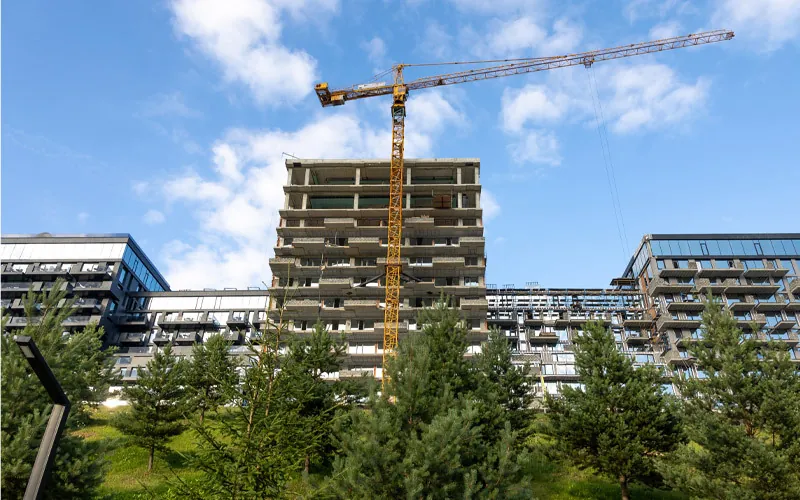
Plovdiv is solidifying its position as one of the fastest-growing cities in Bulgaria, as, according to the latest data from the NSI, it leads in construction activity. In the third quarter of 2025 alone, 442 permits for new residential buildings were issued in the city, representing an increase of nearly 12% compared to the previous three months. These projects plan for 3,744 housing units, or 34% more than in the prior period – a growth not seen in any other region in the country.
High Activity in Plovdiv
During the same period, Plovdiv also recorded exceptionally high activity in the commencement of construction on 287 new residential buildings, placing it not only ahead of Sofia but also ahead of traditionally strong markets like Varna and Burgas.
This surge is no coincidence. The combination of high demand, good infrastructure prospects, potential for expansion, and, most importantly, efficient administrative processes creates conditions that attract an increasing number of local and foreign investors.
What impact does the administrative environment have?
Very often, the success of the construction sector is linked to economic or demographic factors, but in the case of Plovdiv, another component plays an important role – smooth and predictable administrative procedures. According to the observations of Stanimir Raev, manager at Nov Dom 1, this is one of the main drivers of growth: “The procedures for detailed development plans, building permits, and commissioning in Plovdiv are significantly more efficient. This shortens the time needed to complete a project and makes the market extremely favorable for investors.”
When processes are faster, projects are completed more quickly, capital circulates more dynamically, and investors have greater confidence to plan future expansions. This places Plovdiv in a competitive position compared to other major cities, where similar procedures are often delayed.
Capital follows population concentration
Construction growth is directly linked to changes in the profile of buyers and investors. While years ago the market was dominated by local residents, today the trend is different – demand comes from a wider region.
“Many people from surrounding towns prefer to invest specifically in Plovdiv – a larger, economically active center where prices are still attractive,” notes Raev.
Investors are becoming increasingly diverse, including in terms of origin. “An increasing share consists of foreign investors. When the population concentrates in the four major cities: Sofia, Plovdiv, Varna, and Burgas, capital follows this concentration,” he adds.
An abundance of projects, but not of quality finished homes
An interesting contradiction is observed in the Plovdiv market: a huge growth in properties “under construction,” but there is also a serious shortage of quality, nearly finished or completed homes.
“The market is oversaturated with properties under construction, but there is a serious shortage of quality properties beyond Act 14. This very oversaturation makes the market healthy because prices remain attractive and affordable, both for city residents and those from the surrounding areas,” explains Raev.
Prices Rise Gradually, and Buying “Off-Plan” Remains Preferred
Plovdiv continues to offer price predictability. There are increases, but they are moderate – a sign of a mature and balanced market. This, in turn, sustains strong interest in buying “off-plan.”
“The price difference between buying ‘off-plan’ and a finished property is becoming increasingly noticeable, and more people with 10–15 thousand euros in capital can step into the role of investors,” comments Raev.
According to his observations, by 2025 almost everyone becomes an investor. When there are schemes like 20% payment upon preliminary contract and 80% upon commissioning, this opens the door for people who have 10–15,000 euros and are looking for a quick opportunity to invest their capital. Naturally, this sustains interest in the early stages of construction.
Where Will the Next Construction Boom Be?
The outlook for 2026 clearly outlines which neighborhoods will become centers of future growth. The southern areas Ostromila and Belomorski remain undisputed leaders.
“They offer space, fresh air, new infrastructure, and enormous unrealized potential,” comments Raev. Alongside them, the Hristo Smirnenski neighborhood continues to be one of the most established and steadily developing locations, favored by both buyers and investors.
The record growth in permits, high construction activity, strong external demand, and clear trends toward new neighborhoods of the future place Plovdiv in a very strong position. The city is not just growing – it is transforming, attracting increasingly diverse capital and creating conditions for sustainable development.